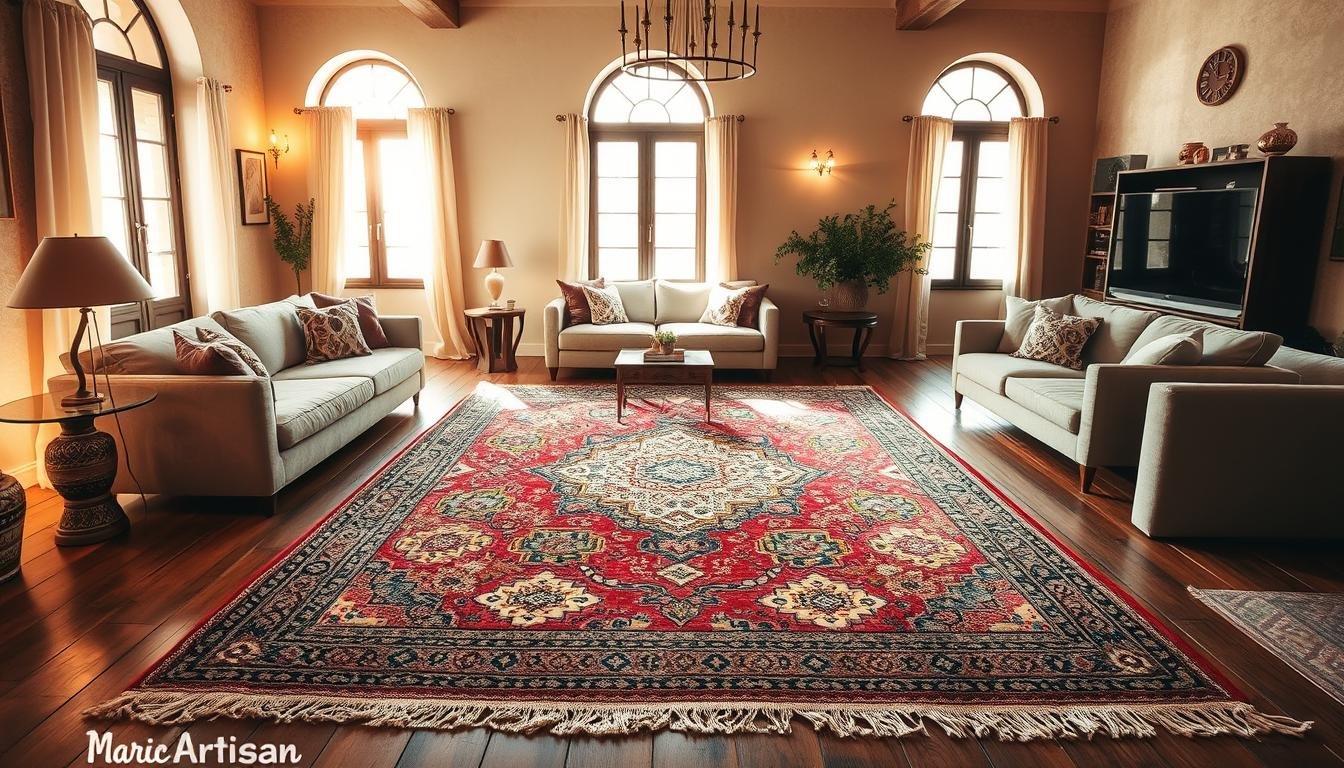
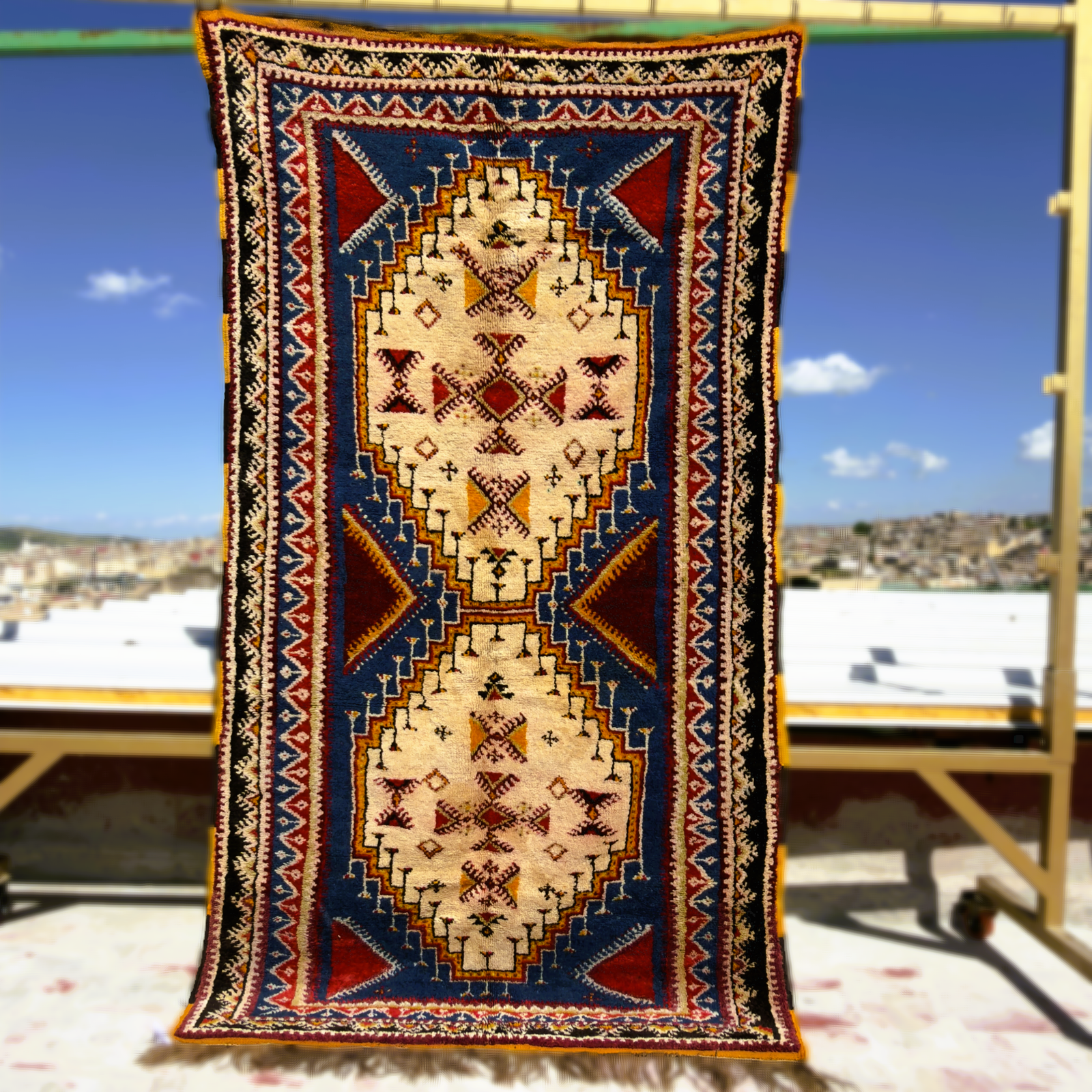
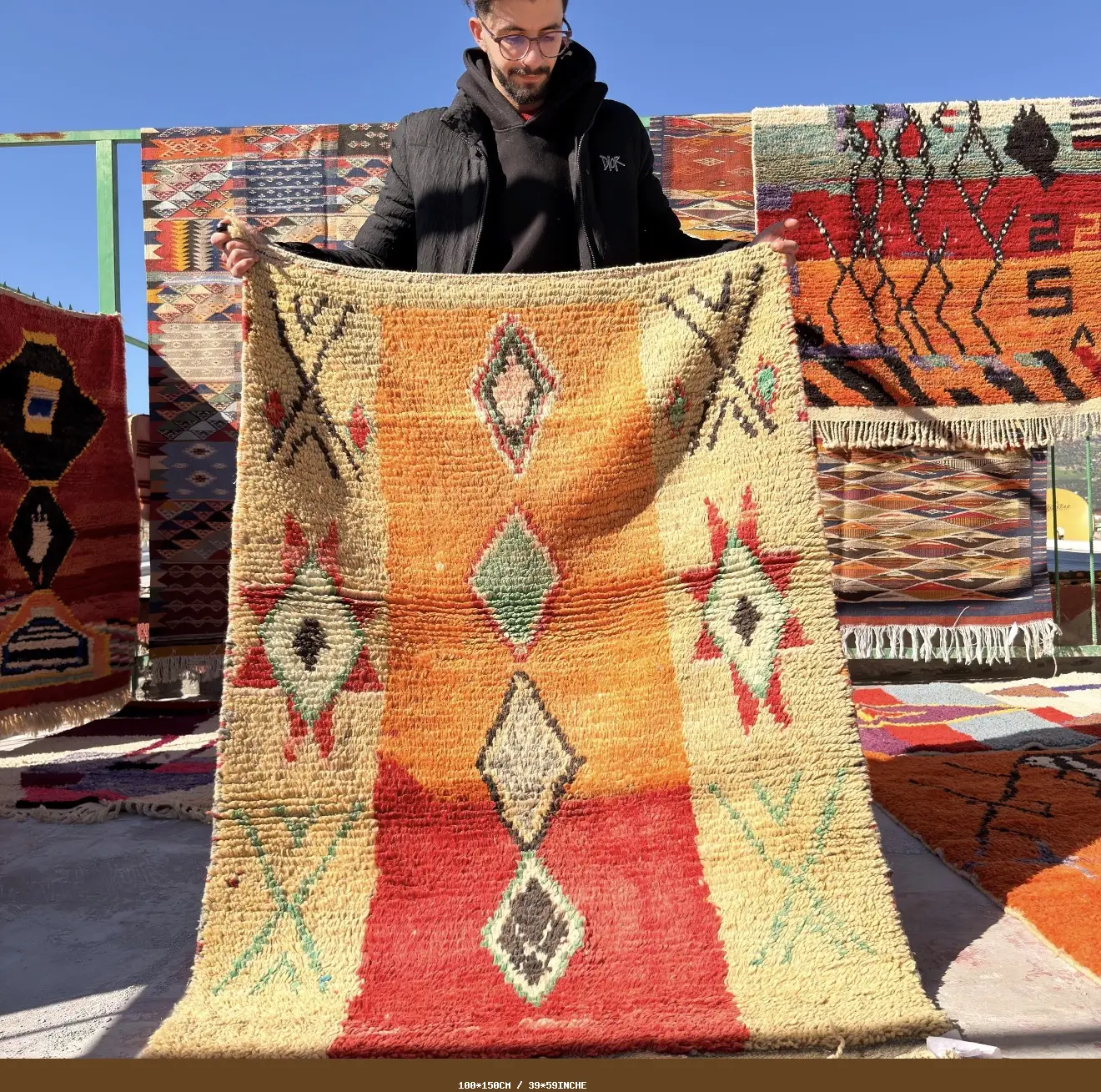
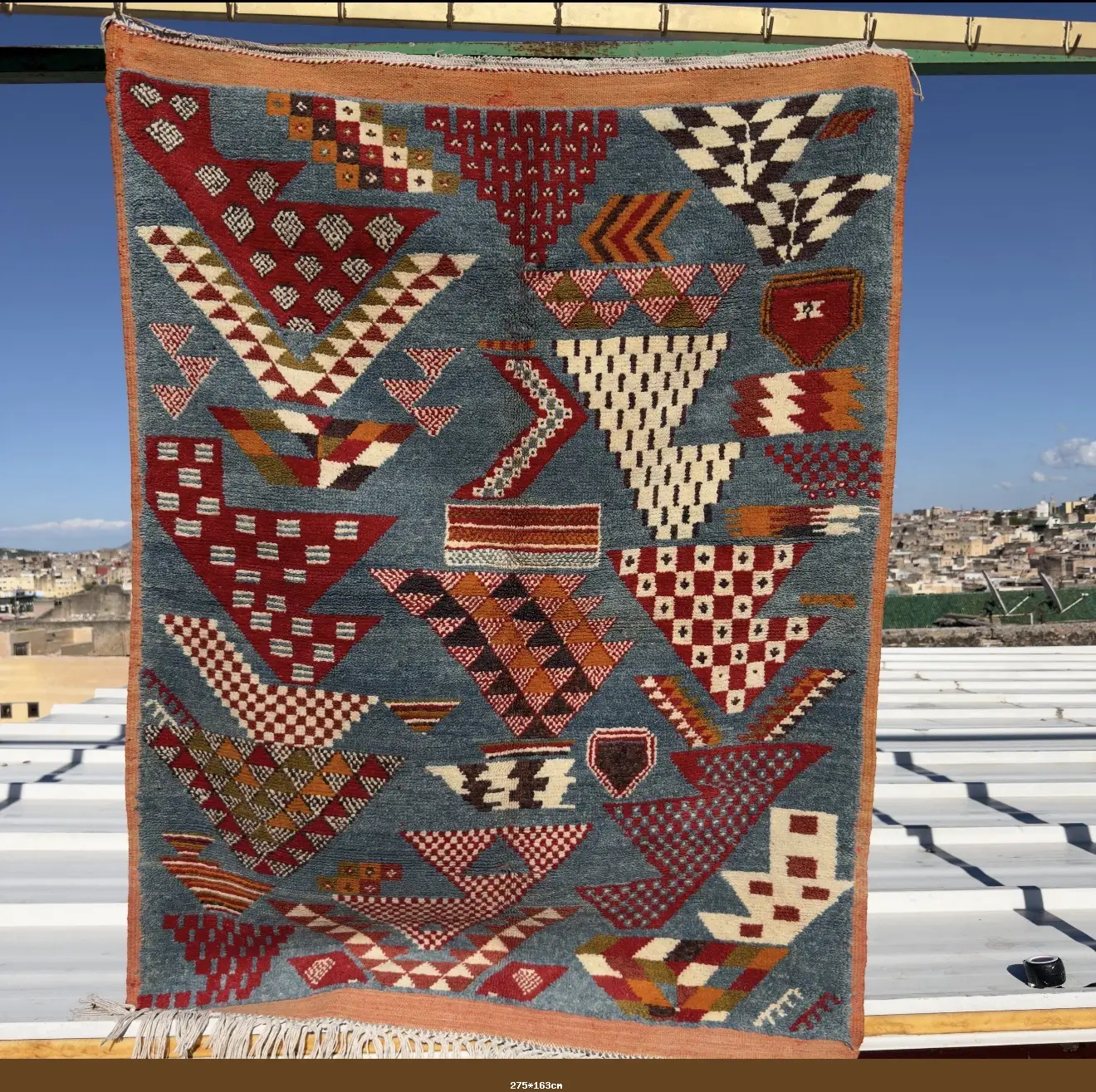
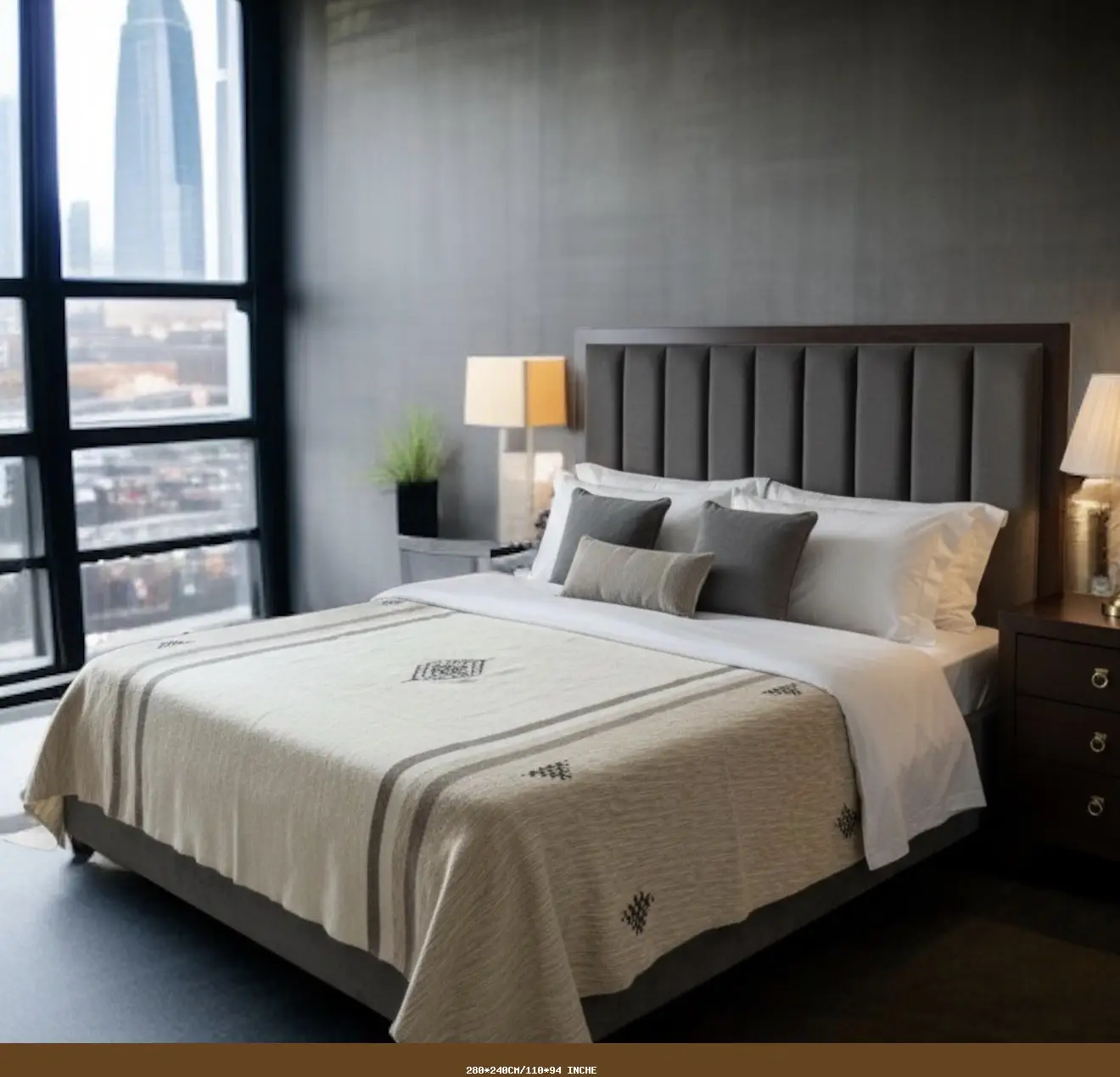
Stepping into the world of area rugs can feel like entering a foreign country. You’re suddenly surrounded by a new language, with terms like "abrash," "kilim," "pile," and "weft" being thrown around. Whether you're a first-time buyer or a seasoned collector, understanding this terminology is the key to appreciating the artistry of a rug and making a confident purchase.
Consider this your passport. We've compiled a comprehensive A-to-Z glossary of the most essential rug terms. Keep this guide handy, and you'll be speaking the language of rugs like a native in no time.

A
-
Abrash: The natural and subtle variations in color found in a hand-dyed, hand-knotted rug. These shifts in tone are not considered flaws but are hallmarks of authenticity and artistry.
-
All-Over Pattern: A design that features repeating motifs across the entire field of the rug, without a central medallion.
-
Antique: A rug that is officially 100 years old or more. These are often highly valuable collector's items.
B
-
Backing: The material on the underside of a rug that helps it hold its shape. In hand-tufted rugs, this is a fabric layer that covers the latex glue.
-
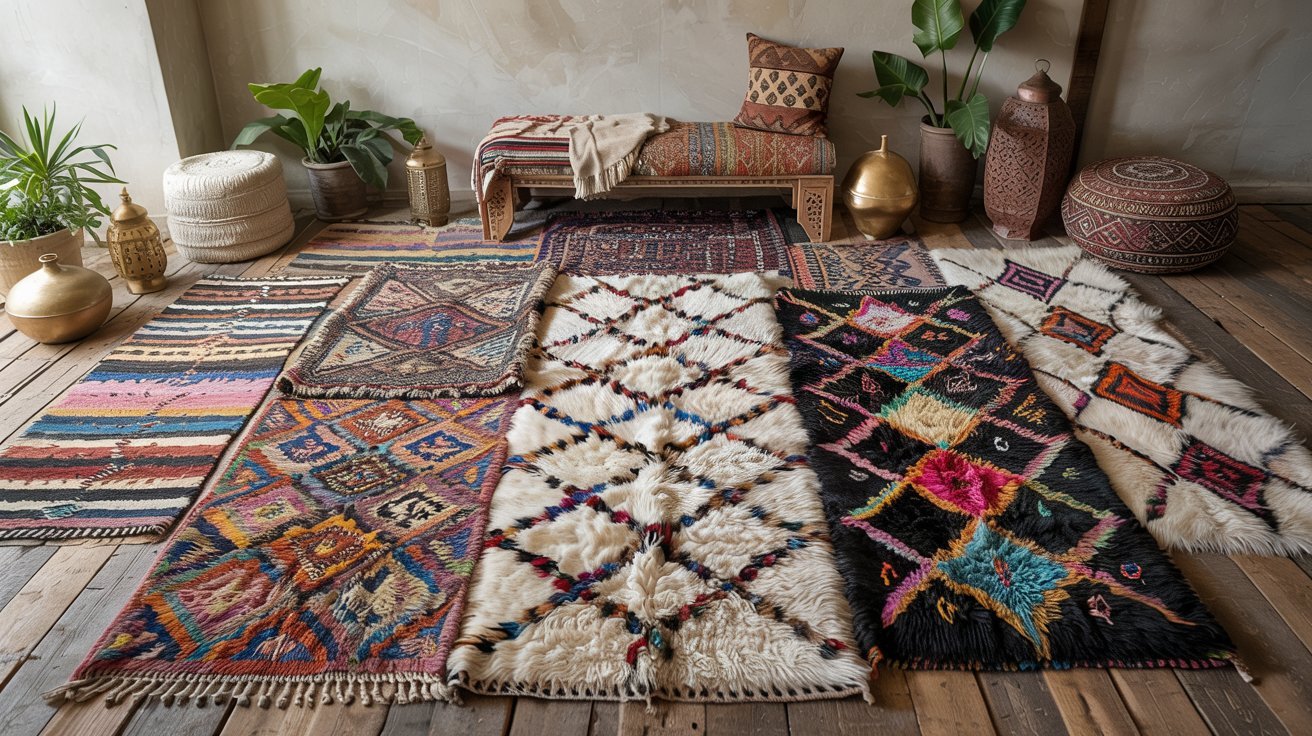
Beni Ourain: A style of Moroccan Berber rug known for its plush, high pile of natural ivory wool and minimalist geometric patterns, typically black or brown diamonds.
-
Border: The decorative design that frames the outer edge of a rug, enclosing the main field.
D
-
Dhurrie: A type of flat-woven rug from India, known for its tight weave, durability, and often colorful geometric patterns. They are reversible.
-
Dye: The substance used to color the rug's fibers. Natural dyes are derived from plants and minerals, while synthetic dyes are chemically produced.
F
-
Field: The central part of the rug's design, which is enclosed by the border.
-
Flatweave: A category of rugs that are woven on a loom rather than knotted. They have no pile, are relatively thin, and are reversible. Kilims and Dhurries are types of flatweaves.
-
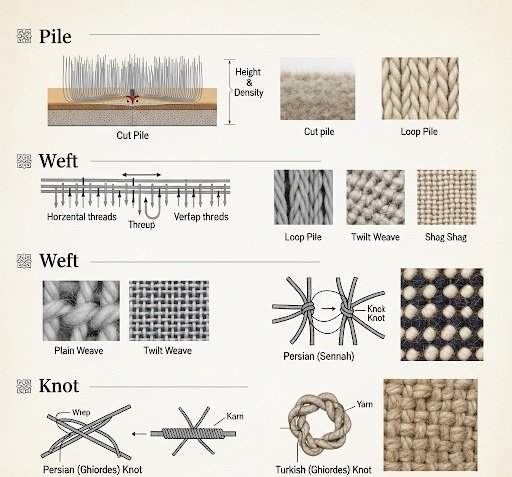
Foundation: The underlying structure of a rug, made up of the intersecting warp (vertical) and weft (horizontal) threads, onto which the knots are tied.
-
Fringe (or Tassels): The threads of the warp that extend beyond the end of the rug. On a hand-knotted rug, the fringe is an integral part of its construction.
H
-
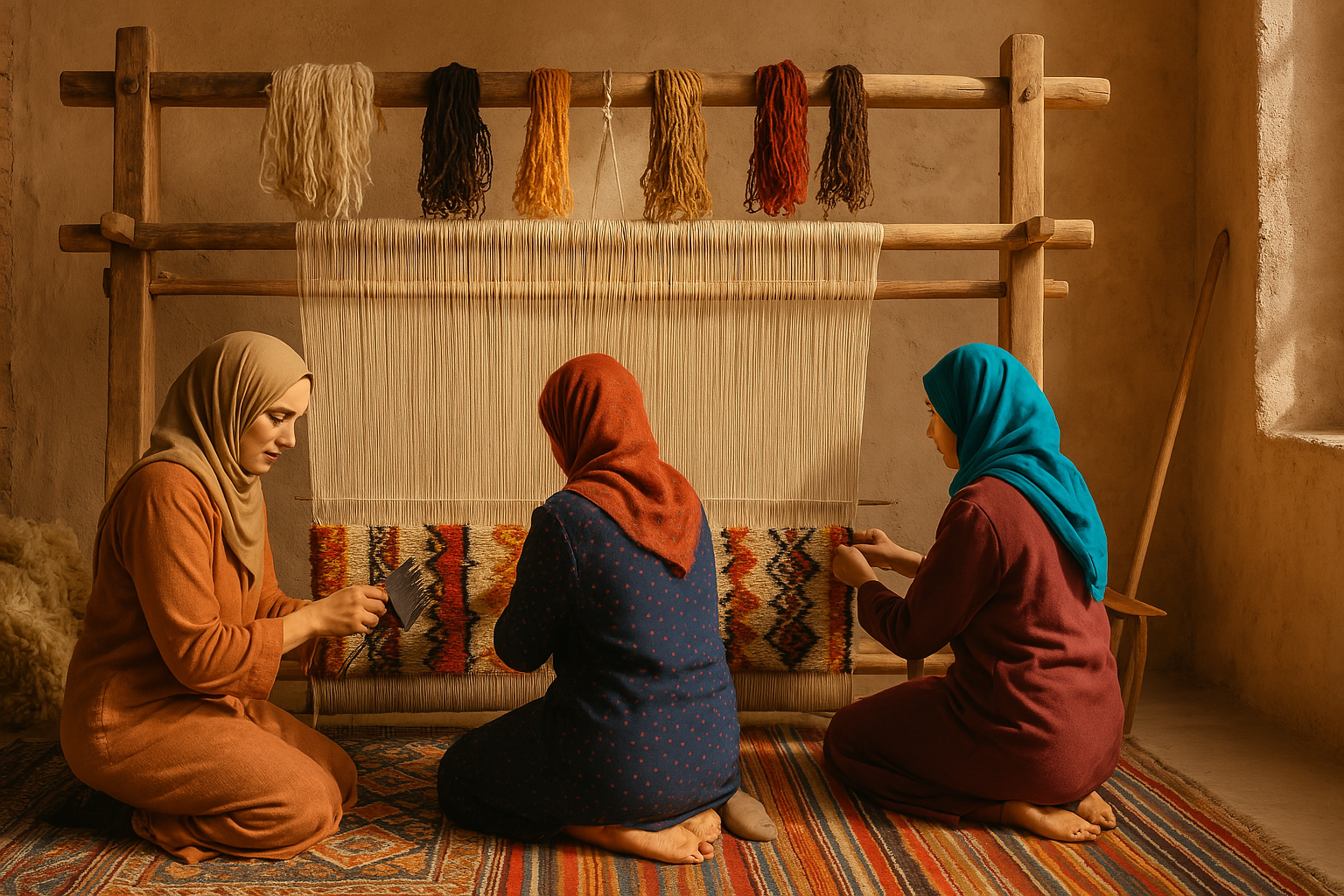
Hand-Knotted: The most labor-intensive and durable method of rug making. A weaver individually ties each knot of yarn to the rug's foundation on a loom.
-
Hand-Tufted: A faster method where a "tufting gun" punches yarn through a canvas backing. The fibers are held in place with latex glue and a secondary backing.
J
-
Jute: A soft, natural plant fiber used to make durable, eco-friendly rugs. It has a natural, earthy texture.
K
-
Kilim: A type of flat-woven rug with roots in Turkey, the Balkans, and the Caucasus. They are known for their bold, geometric patterns.
-
Knot Density: The number of knots per square inch (KPSI). A higher KPSI indicates a finer, more detailed weave and a more durable rug.
L
-
Large Area Rugs: A general term for rugs of a significant size, typically 8'x10' or larger, designed to anchor the furniture in a room.
-
Loom: The frame or machine used to weave a rug.
M
-
Machine-Made: Rugs produced quickly on a power loom, which is controlled by a computer. They are often made of synthetic fibers.
-
Medallion: A large, ornamental design that appears as the centerpiece of a rug's field.
O
-
Overdyed: A process where a vintage or used rug is stripped of its original color and then re-dyed in a single, vibrant, monochromatic color, creating a modern, saturated look.
P
-
Pile: The surface of the rug, made up of the cut ends of the yarn. The height of the pile determines the rug's thickness (e.g., low-pile vs. high-pile).
-
Polypropylene: A durable, stain-resistant synthetic fiber commonly used in machine-made rugs, especially those designed for high-traffic or outdoor use.
R
S
-
Shag: A rug with a very long, deep pile, known for its soft, shaggy texture.
-
Sisal: A strong, stiff natural fiber derived from the agave plant, used to make highly durable, low-pile rugs.
V
W
-
Warp: The vertical threads that form the foundation of a rug, stretched on the loom. The fringe is made of the warp threads.
-
Weft: The horizontal threads that are woven over and under the warp threads to create the rug's foundation and secure the knots in place.
-
Wool: The most common natural fiber used in high-quality rugs, prized for its softness, durability, and natural stain resistance.
Conclusion: Speak the Language of Style
With this glossary in hand, you're no longer just a shopper; you're an informed enthusiast. Understanding these terms will help you appreciate the incredible craftsmanship that goes into every rug and empower you to choose the perfect piece for your home with knowledge and confidence.
Entrer dans le monde des tapis peut donner l'impression d'entrer dans un pays étranger. Vous êtes soudainement entouré d'un nouveau langage, avec des termes comme « abrash », « kilim », « velours » et « trame » qui fusent. Que vous soyez un acheteur novice ou un collectionneur chevronné, la compréhension de cette terminologie est la clé pour apprécier l'art d'un tapis et faire un achat en toute confiance.
Considérez ceci comme votre passeport. Nous avons compilé un glossaire complet de A à Z des termes de tapis les plus essentiels. Gardez ce guide à portée de main, et vous parlerez la langue des tapis comme un natif en un rien de temps.
A
-
Abrash : Les variations naturelles et subtiles de couleur que l'on trouve dans un tapis noué à la main et teint à la main. Ces changements de ton ne sont pas considérés comme des défauts mais sont des marques d'authenticité et d'art.
-
Antique : Un tapis qui a officiellement 100 ans ou plus. Ce sont souvent des objets de collection de grande valeur.
-
All-Over Pattern (Motif continu) : Un dessin qui présente des motifs répétitifs sur tout le champ du tapis, sans médaillon central.
B
-
Backing (Dossier) : Le matériau sur la face inférieure d'un tapis qui l'aide à conserver sa forme. Dans les tapis tuftés à la main, il s'agit d'une couche de tissu qui recouvre la colle au latex.
-
Beni Ouarain : Un style de tapis berbère marocain connu pour son velours moelleux et haut en laine d'ivoire naturelle et ses motifs géométriques minimalistes, généralement des losanges noirs ou bruns.
-
Border (Bordure) : Le dessin décoratif qui encadre le bord extérieur d'un tapis, enserrant le champ principal.
D
-
Dhurrie : Un type de tapis tissé à plat originaire de l'Inde, connu pour son tissage serré, sa durabilité et ses motifs géométriques souvent colorés. Ils sont réversibles.
-
Dye (Teinture) : La substance utilisée pour colorer les fibres du tapis. Les teintures naturelles sont dérivées de plantes et de minéraux, tandis que les teintures synthétiques sont produites chimiquement.
F
-
Field (Champ) : La partie centrale du dessin du tapis, qui est entourée par la bordure.
-
Flatweave (Tissage plat) : Une catégorie de tapis qui sont tissés sur un métier à tisser plutôt que noués. Ils n'ont pas de velours, sont relativement fins et sont réversibles. Les kilims et les dhurries sont des types de tissages plats.
-
Foundation (Fondation) : La structure sous-jacente d'un tapis, composée des fils de chaîne (verticaux) et de trame (horizontaux) qui s'entrecroisent, sur lesquels les nœuds sont liés.
-
Fringe (Frange ou Pompons) : Les fils de la chaîne qui dépassent de l'extrémité du tapis. Sur un tapis noué à la main, la frange fait partie intégrante de sa construction.
H
-
Hand-Knotted (Noué à la main) : La méthode de fabrication de tapis la plus laborieuse et la plus durable. Un tisserand noue individuellement chaque nœud de fil à la fondation du tapis sur un métier à tisser.
-
Hand-Tufted (Tufté à la main) : Une méthode plus rapide où un « pistolet à tufter » insère le fil à travers un support en toile. Les fibres sont maintenues en place avec de la colle au latex et un dossier secondaire.
J
K
-
Kilim : Un type de tapis tissé à plat originaire de Turquie, des Balkans et du Caucase. Ils sont connus pour leurs motifs géométriques audacieux.
-
Knot Density (Densité de nouage) : Le nombre de nœuds par pouce carré (KPSI). Un KPSI plus élevé indique un tissage plus fin et plus détaillé et un tapis plus durable.
L
-
Large Area Rugs (Grands tapis) : Un terme général pour les tapis de taille importante, généralement de 8'x10' ou plus, conçus pour ancrer les meubles dans une pièce.
-
Loom (Métier à tisser) : Le cadre ou la machine utilisé pour tisser un tapis.
M
-
Machine-Made (Fait à la machine) : Tapis produits rapidement sur un métier à tisser mécanique, contrôlé par un ordinateur. Ils sont souvent faits de fibres synthétiques.
-
Medallion (Médaillon) : Un grand dessin ornemental qui apparaît comme la pièce maîtresse du champ d'un tapis.
O
P
-
Pile (Velours) : La surface du tapis, constituée des extrémités coupées du fil. La hauteur du velours détermine l'épaisseur du tapis (par exemple, velours ras ou velours haut).
-
Polypropylène : Une fibre synthétique durable et résistante aux taches, couramment utilisée dans les tapis faits à la machine, en particulier ceux conçus pour un trafic intense ou une utilisation en extérieur.
R
S
-
Shag : Un tapis avec un velours très long et profond, connu pour sa texture douce et hirsute.
-
Sisal : Une fibre naturelle solide et rigide dérivée de la plante d'agave, utilisée pour fabriquer des tapis à velours ras très durables.
V
W
-
Warp (Chaîne) : Les fils verticaux qui forment la fondation d'un tapis, tendus sur le métier à tisser. La frange est constituée des fils de chaîne.
-
Weft (Trame) : Les fils horizontaux qui sont tissés par-dessus et par-dessous les fils de chaîne pour créer la fondation du tapis et maintenir les nœuds en place.
-
Wool (Laine) : La fibre naturelle la plus courante utilisée dans les tapis de haute qualité, prisée pour sa douceur, sa durabilité et sa résistance naturelle aux taches.
Conclusion : Parlez le langage du style
Avec ce glossaire en main, vous n'êtes plus un simple acheteur ; vous êtes un passionné informé. La compréhension de ces termes vous aidera à apprécier l'incroyable savoir-faire de chaque tapis et vous donnera les moyens de choisir la pièce parfaite pour votre maison avec connaissance et confiance.
Entrar en el mundo de las alfombras puede parecer como entrar en un país extranjero. De repente, te ves rodeado de un nuevo lenguaje, con términos como «abrash», «kilim», «pelo» y «trama» que se usan constantemente. Ya seas un comprador primerizo o un coleccionista experimentado, comprender esta terminología es la clave para apreciar el arte de una alfombra y realizar una compra con confianza.
Considera esto como tu pasaporte. Hemos compilado un completo glosario de la A a la Z con los términos más esenciales sobre alfombras. Ten esta guía a mano y hablarás el lenguaje de las alfombras como un nativo en poco tiempo.
A
-
Abrash: Las variaciones naturales y sutiles de color que se encuentran en una alfombra anudada y teñida a mano. Estos cambios de tono no se consideran defectos, sino marcas de autenticidad y arte.
-
Antiguo: Una alfombra que tiene oficialmente 100 años o más. Suelen ser objetos de colección de gran valor.
-
All-Over Pattern (Patrón continuo): Un diseño que presenta motivos repetitivos en todo el campo de la alfombra, sin un medallón central.
B
-
Backing (Soporte): El material en la parte inferior de una alfombra que le ayuda a mantener su forma. En las alfombras tufted a mano, es una capa de tela que cubre el pegamento de látex.
-
Beni Ouarain: Un estilo de alfombra bereber marroquí conocida por su pelo alto y afelpado de lana de marfil natural y sus patrones geométricos minimalistas, generalmente rombos negros o marrones.
-
Border (Borde): El diseño decorativo que enmarca el borde exterior de una alfombra, encerrando el campo principal.
D
-
Dhurrie: Un tipo de alfombra de tejido plano originaria de la India, conocida por su tejido apretado, su durabilidad y sus patrones geométricos a menudo coloridos. Son reversibles.
-
Dye (Tinte): La sustancia utilizada para colorear las fibras de la alfombra. Los tintes naturales se derivan de plantas y minerales, mientras que los tintes sintéticos se producen químicamente.
F
-
Field (Campo): La parte central del diseño de la alfombra, que está rodeada por el borde.
-
Flatweave (Tejido plano): Una categoría de alfombras que se tejen en un telar en lugar de anudarse. No tienen pelo, son relativamente delgadas y son reversibles. Los kilims y los dhurries son tipos de tejidos planos.
-
Foundation (Base): La estructura subyacente de una alfombra, compuesta por los hilos de urdimbre (verticales) y de trama (horizontales) que se entrecruzan, sobre los cuales se atan los nudos.
-
Fringe (Flecos o Borlas): Los hilos de la urdimbre que se extienden más allá del extremo de la alfombra. En una alfombra anudada a mano, los flecos son una parte integral de su construcción.
H
-
Hand-Knotted (Anudado a mano): El método de fabricación de alfombras más laborioso y duradero. Un tejedor ata individualmente cada nudo de hilo a la base de la alfombra en un telar.
-
Hand-Tufted (Tufted a mano): Un método más rápido en el que una «pistola de tufting» inserta el hilo a través de un soporte de lona. Las fibras se mantienen en su lugar con pegamento de látex y un soporte secundario.
J
K
-
Kilim: Un tipo de alfombra de tejido plano originaria de Turquía, los Balcanes y el Cáucaso. Son conocidas por sus audaces patrones geométricos.
-
Knot Density (Densidad de nudos): El número de nudos por pulgada cuadrada (KPSI). Un KPSI más alto indica un tejido más fino y detallado y una alfombra más duradera.
L
-
Large Area Rugs (Alfombras grandes): Un término general para alfombras de tamaño considerable, generalmente de 8'x10' o más, diseñadas para anclar los muebles en una habitación.
-
Loom (Telar): El marco o la máquina utilizada para tejer una alfombra.
M
-
Machine-Made (Hecho a máquina): Alfombras producidas rápidamente en un telar mecánico, controlado por una computadora. A menudo están hechas de fibras sintéticas.
-
Medallion (Medallón): Un gran diseño ornamental que aparece como la pieza central del campo de una alfombra.
O
P
-
Pile (Pelo): La superficie de la alfombra, compuesta por los extremos cortados del hilo. La altura del pelo determina el grosor de la alfombra (por ejemplo, pelo corto o pelo alto).
-
Polypropylene (Polipropileno): Una fibra sintética duradera y resistente a las manchas, comúnmente utilizada en alfombras hechas a máquina, especialmente aquellas diseñadas para un alto tráfico o para uso en exteriores.
R
S
-
Shag: Una alfombra con un pelo muy largo y profundo, conocida por su textura suave y peluda.
-
Sisal: Una fibra natural fuerte y rígida derivada de la planta de agave, utilizada para fabricar alfombras de pelo corto muy duraderas.
V
W
-
Warp (Urdimbre): Los hilos verticales que forman la base de una alfombra, tensados en el telar. Los flecos están formados por los hilos de la urdimbre.
-
Weft (Trama): Los hilos horizontales que se tejen por encima y por debajo de los hilos de la urdimbre para crear la base de la alfombra y asegurar los nudos en su lugar.
-
Wool (Lana): La fibra natural más común utilizada en alfombras de alta calidad, apreciada por su suavidad, durabilidad y resistencia natural a las manchas.
Conclusión: Hable el lenguaje del estilo
Con este glosario en mano, ya no es un simple comprador; es un aficionado informado. Comprender estos términos le ayudará a apreciar la increíble artesanía de cada alfombra y le dará el poder de elegir la pieza perfecta para su hogar con conocimiento y confianza.